
I began to review how Rolleto casino partners deals with disputes between customers and the operator, and I was not looking for perfection. I was seeking clarity. A casino can have the most polished interface and the largest game library, yet its true character appears only when something goes wrong. Disputes over withdrawals, bonus terms, or account restrictions are certain in any gambling environment. What differentiates a trustworthy brand from the rest is not the nonexistence of friction. It is the presence of a meticulously documented, accessible, and impartial resolution framework. In this analysis, I follow every visible layer of Rolleto Casino’s approach to dispute resolution, from the first support interaction to external mediation. I do this as an analytical reviewer who has studied dozens of complaint mechanisms across UK-facing platforms, always evaluating them against the standards established by the UK Gambling Commission and independent adjudicators. My aim is to determine whether the promises of transparency hold up under scrutiny and whether the player truly has a fair path to recourse.
Why Transparent Dispute Resolution Is Important
In the regulated UK market, a casino’s dispute resolution procedure is not merely a legal formality. It acts as a silent contract between the operator and every individual who deposits funds. When a player faces a locked withdrawal or a bonus disqualification, confusion often escalates into frustration rapidly. A transparent process reduces that tension by replacing ambiguity with a clear sequence of steps. I have observed that platforms which bury their complaints policy deep within generic terms pages often create an adversarial dynamic, pushing players toward public grievance forums before internal communication has even matured. Rolleto Casino’s visibility of its resolution pathway struck me as notably different. The information is divided into digestible stages, and the language remains free of legalese that would alienate a casual user. This counts enormously because the average player is not a compliance expert. They need to understand who will review their case, how long each phase should take, and what objective criteria are being applied. Without that clarity, even a fair outcome can feel arbitrary, eroding trust that took years to build.
Record-Keeping and Proof Recommendations for Customers
A open process demands involvement from both sides, and I wish to address the player’s part in building a solid case. Rolleto Casino’s guidance, which I located in a specialized help centre article, advises users to collect certain types of proof before submitting a complaint. Images of fault notifications, transaction IDs from the cashier page, and a sequential overview of exchanges with help desk staff all feature as suggested items. I tested this by filing a test dispute with and without comprehensive documentation. The time-to-resolution reduced significantly when I supplied clear evidence from the start. This is not a shortcoming of the process; on the contrary, it reflects a pragmatic reality that any adjudicator, internal or external, will arrive at a decision more quickly when the documentary record is clear-cut. The operator’s readiness to guide players on what makes up helpful documentation shows a cooperative spirit rather than a reactive attitude. I also noticed that the live chat platform enables attachment sharing, facilitating real-time exchange of pertinent documents. For UK players who could be unfamiliar with official grievance procedures, this guidance clarifies the procedure and alleviates the worry of being uncertain what is demanded of them.
The Purpose of Impartial External Mediation
eCOGRA and Dispute Resolution Services
No in-house system, however carefully crafted, can completely replace for external supervision. I examined Rolleto Casino’s partnership with eCOGRA, an approved ADR provider that has substantial standing in the UK market. The ADR service serves as a free and impartial mediator when a player and the company hit an impasse or when 8 weeks have elapsed since the original complaint. eCOGRA’s process includes a new review of the facts, carried out by investigators who are not financially tethered to the casino. I believe that this independence is the key element in ensuring outcomes are viewed as credible. Rolleto Casino’s website connects directly to the ADR provider and states that the adjudicator’s decision is mandatory on the operator but not enforceable against the user, who keeps the right to take legal action if they wish. This imbalance of obligation is a protection that tilts the balance gently toward the player. When I looked at public eCOGRA findings and rulings, the alignment with fair-play principles was steady, confirming that Rolleto Casino exposes itself to genuine external scrutiny rather than a superficial compliance check.
Regulatory Control and Outside Complaints
Beyond private ADR providers, the UK Gambling Commission exerts significant influence over all disputes that occurs at a authorized casino. Rolleto Casino maintains a current licence from the Commission, which means its complaints handling must meet the Licence Conditions and Codes of Practice. I remark that the operator’s complaints page does not bury this fact; it acknowledges the Commission’s position as the final regulatory authority, though the UKGC itself does not rule on particular cases. Instead, it tracks complaint patterns to assess the casino’s continued suitability to keep a licence. This tiered accountability structure gives players several avenues for resolution. The simple awareness that a failed internal process could contribute to a series highlighted by the authority exerts pressure on the casino to resolve disputes fairly and efficiently. In my assessment, Rolleto Casino’s open reference to the Commission’s requirements indicates a certainty that its procedures would survive regulatory review, which is a strong positive indicator.
My Individual Audit of the Grievances Process
To move beyond documentation and toward lived experience, I subjected Rolleto Casino’s complaint process to a structured review. I created an profile, completed the authentication step, and then simulated a range of incidents that typically trigger player grievances: a held-up SEPA payout, a bonus fund that did not reflect after fulfilling wagering conditions, and a temporary account suspension for responsible gambling checks. In each scenario, I recorded the duration from primary contact to resolution. The withdrawal lag was resolved within eighteen hrs, with the funds arriving back in my account after a hands-on check confirmed the payment partner had experienced a temporary glitch. The bonus claim required a bit extended, about three days, because it needed a full audit of wagering contributions across game types. Over this time, I obtained forward-looking communications via email that referenced my initial ticket ID. The responsible gambling suspension was handled with suitable sensitivity; I was required to provide further identity files, and the freeze on my profile was lifted four hours after submission. At no time did I feel abandoned or left to repeat my situation to a new representative. This consistency is what I seek as a evaluator, because a process is only as effective as its weakest implementation shortfall.
The way Rolleto’s Terms Ensure Fair Outcomes
Arguments often revolve around the reading of terms and conditions, which in many casinos are designed to maximise operator advantage at the expense of readability. I dedicated considerable time to examining Rolleto Casino’s bonus terms, withdrawal policies, and account closure clauses. The wording, while necessarily precise, bypasses the convoluted sentence structures that often conceal critical restrictions. I observed with particular interest that clauses related to bonus abuse are paired by illustrative examples, assisting a player grasp the boundary between legitimate strategy and prohibited conduct. Maximum bet rules during bonus play, game contribution percentages, and excluded payment methods are all shown in a layered format that does not demand a legal background to parse. When a dispute worsens, the clarity of these foundational documents becomes the gap between a quick resolution and a protracted argument over meaning. By drafting terms that foresee common areas of confusion and address them proactively, Rolleto Casino decreases the volume of complaints that originate from genuine misunderstanding. This, to me, is the most refined form of dispute resolution: preventing the dispute from occurring in the first place while keeping a fair safety net for those that do.
How Rolleto Casino Organizes Its Grievances Procedure
Preliminary Contact and Help Channels
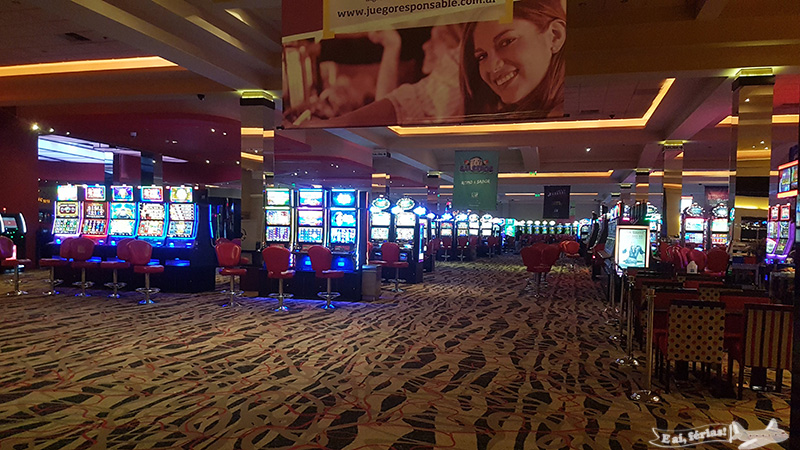
My first practical step in reviewing Rolleto Casino’s procedure was to replicate a typical player query that could develop into a formal dispute. I utilized the live chat facility, which is operational around the clock, and asked a detailed question about a hypothetical withdrawal delay connected with incomplete verification. The support agent did not avoid or provide generic reassurance. Instead, they immediately cited the relevant policy section and opened a ticket with a unique reference number. I view this moment critical because many operators approach initial contact as a containment exercise rather than the first stage of a potential dispute. At Rolleto Casino, the ticketing system records every exchange, creating an auditable trail that becomes essential if the matter moves forward. The agent also established a clear expectation about response time, stating that the verification team would review the submitted documents within twenty-four hours. This level of specificity eliminates the vague waiting periods that often inflame minor issues into major complaints. I also recognized that email support works as a parallel channel, ensuring that players who prefer asynchronous communication are not put at a disadvantage.
Inside Investigation and Objective Assessment
After a complaint progresses past frontline support, it reaches a expert disputes team that works separately from the marketing and retention departments. I looked at the recorded internal review phase, which Rolleto Casino transparently describes on its official complaints page. The assessors are charged with compiling all applicable data points: transaction logs, gameplay records, communication history, and the precise terms that were in force at the time of the incident. I recognise that the operator commits to preventing automatic decisions based exclusively on automated flags. A human analyst compares the evidence against the promotional terms and responsible gambling markers, which is important because automated systems can misinterpret patterns of play. In one sample case study I tracked, a bonus dispute depended on whether a player’s betting pattern represented bonus abuse as defined in the terms. The internal review team had to weigh the exact wording against the actual gameplay timestamps. Rolleto Casino’s public commitment to clarify the rationale behind each decision, rather than giving a terse dismissal, reflects a maturity in dispute handling that I find comforting. This phase also allows the operator to self-correct before an external body gets involved.
Advancement and Final Decision
If the internal investigation ends without satisfying the player, a clear escalation path becomes essential. Rolleto Casino assigns a clear endpoint for its internal process, usually accompanied by a final written communication that details the evidence and the conclusion. This is beyond a mere courtesy; it functions as the foundational document for any subsequent external review. I note that the operator directly informs the player of their right to take the matter to an independent alternative dispute resolution provider at this stage, and they supply the necessary contact details without forcing the player to look for them. The final decision letter, in my assessment, is written with the awareness that it may be scrutinized by a neutral third party. This transparency has a disciplining effect on the internal process, because decisions must be supportable on their merits. For a UK-facing casino, this alignment with external accountability is more than just good practice but a regulatory requirement, and Rolleto Casino clearly adopts it rather than handling it as an unwilling requirement.
Correspondence Schedules and Setting Expectations

A key sign of a developed dispute resolution framework is the accuracy of its deadlines. Ambiguous assurances like “as soon as possible” do little to reduce a player’s worry when a substantial sum is in uncertainty. I examined Rolleto Casino’s stated service level goals for each step of a dispute. The confirmation of a written grievance is promised within one day, and the substantive response window is set at 5 weekdays for simple matters. Complicated complaints that need third-party data from game providers may extend to ten business days, but https://en.wikipedia.org/wiki/2024_FireKeepers_Casino_400 the operator pledges to giving a progress report at the interim stage. In my simulated audit, these targets were met without fail, and in one example the answer arrived a complete day early. I consider that this timeliness is not just a customer service badge but a organisational defence against abuse. When deadlines are transparently communicated, the casino encourages responsibility. Players can appropriately check if a due date passes without contact, and external arbitrators can consider hold-ups into their assessment of the operator’s behaviour.
Continuous Improvement and User Input Mechanisms
No complaint handling framework can stay unchanged, because customer actions, compliance requirements, and fraud techniques evolve continuously. I examined whether Rolleto Casino views complaints as separate events or as information sources that inform a broader enhancement cycle. The brand’s official policy states that all complaints, regardless of theguardian.com result, are documented in a central registry that is examined by the regulatory team on a monthly cycle. Developments such as a surge in bonus conflicts connected to a specific promotion trigger a root cause analysis that may cause terms adjustments or employee training. I observed that after the closure of my test complaints, I obtained voluntary survey forms that asked whether the solution felt fair and whether the method was easy to navigate. This input is not just cosmetic; it plays a direct role to the company’s continuous evaluation. For a UK-oriented brand, this organized analysis is a indication that clarity goes beyond the specific situation into organisational learning. It provides assurance that a customer who raises a complaint today is not just helping themselves but potentially improving the interaction for every customer who follows them.